

BDSM for Beginners: Your First Steps into Kink, Control and Pleasure
Curious about BDSM but not sure where to begin? Learn the basics of consent, safewords, boundaries, first steps and beginner-friendly play without making things more complicated than they need to be.
BDSM for beginners is not about jumping straight into something extreme. It is about exploring trust, control, sensation and fantasy with clear consent, agreed boundaries and enough communication that everyone involved feels comfortable. Start simple, choose a safeword and remember: either person can slow things down or stop at any time.
Contents
- What does BDSM mean for beginners?
- What is the difference between BDSM, kink and fetish?
- Why are consent and boundaries essential in BDSM?
- What is a BDSM safeword and how does it work?
- What BDSM safety rules should beginners know?
- How do you start BDSM for the first time?
- Which BDSM toys are good for beginners?
- Do you need to be dominant or submissive to enjoy BDSM?
- What is BDSM aftercare and why does it matter?
- Where can you go after the BDSM basics?
- BDSM for beginners FAQ
What does BDSM mean for beginners?
BDSM is an umbrella term for consensual activities involving bondage, discipline, dominance, submission, sadism and masochism. You do not have to enjoy every part of it, and there is no minimum level of intensity required before something "counts" as BDSM.
The initials cover several overlapping ideas:
- Bondage and discipline: restraint, rules and controlled movement.
- Dominance and submission: consensually taking or giving up control.
- Sadism and masochism: enjoying giving or receiving particular controlled sensations, including pain for people who genuinely enjoy it.
In real life, BDSM can be surprisingly simple. Being blindfolded, following your partner's instructions, having your wrists gently restrained or agreeing that one person takes control for a while can all fall under the BDSM umbrella.
What makes the difference is not leather, rope or how dramatic the scene looks. It is the combination of consent, communication and agreed control.
You can explore one tiny corner of BDSM and happily ignore everything else. No membership card required.
What is the difference between BDSM, kink and fetish?
BDSM, kink and fetish can overlap, but they are not interchangeable terms. BDSM refers specifically to activities and dynamics involving things such as restraint, discipline, power exchange and controlled sensation, while kink is a much broader umbrella.
Kink can describe almost any sexual interest that sits outside someone's personal idea of conventional sex. BDSM is therefore one form of kink, but not every kink involves BDSM.
A fetish usually means a particularly strong erotic interest in a certain object, material, body part, situation or theme. Latex, leather, feet or particular clothing can be fetishes, for example, but none automatically involve dominance, bondage or pain.
The useful bit? You do not need to figure out which label fits before you start exploring.
Maybe you like being restrained but have zero interest in pain. Perhaps your partner enjoys giving orders but does not think of themselves as a Dom. That is perfectly fine.
Labels are vocabulary, not entry requirements.
Why are consent and boundaries essential in BDSM?
Consent is the foundation of BDSM because giving someone control is only exciting when that control is willingly and clearly given. Everyone involved should understand what is being suggested, want to participate and know that they can change their mind at any point.
Have the important conversation before you start.
Talk about what sounds exciting, what is completely off-limits and what you might be willing to try carefully. Being comfortable with bondage, for example, does not automatically mean agreeing to impact play, humiliation, orgasm control or anything else.
Try a yes, maybe, no list
Each person can divide possible activities into:
- Yes: I would like to try this.
- Maybe: I am curious, but let's talk about it first.
- No: Not for me.
Start where your enthusiastic yeses overlap.
Consent also continues during play. A previous yes is not permanent permission, and silence is not something to interpret creatively.
A practical note: Choose a time when nobody feels rushed, pressured or obliged to make the fantasy work. BDSM becomes a lot easier to explore when "not tonight" is an equally acceptable answer.
What is a BDSM safeword and how does it work?
A BDSM safeword is an agreed word or signal that tells your partner when something needs to slow down or stop. It is particularly useful when normal words such as "no" or "stop" might appear as part of consensual roleplay.
One of the simplest systems is the traffic-light method:
- Green: everything feels good, continue.
- Yellow: slow down, reduce the intensity or check in.
- Red: stop immediately.
Keep it easy. This is not the moment for an obscure password nobody can remember when their brain is busy elsewhere.
If someone cannot speak comfortably during a particular activity, agree on a non-verbal signal beforehand. That might mean dropping an object held in the hand or repeating a clear physical movement.
A safeword is not a challenge to see how long someone can avoid using it. Using one means the communication system worked.
And you do not have to wait for yellow or red. A simple "Still good?" is always allowed.
What BDSM safety rules should beginners know?
For beginners, one of the smartest BDSM rules is to start lighter and simpler than you think you need to. Intensity can always be increased later once you know how an activity feels in real life rather than only in your imagination.
A few basics make a big difference:
- Agree on boundaries and safewords before starting.
- Avoid experimenting when alcohol or other substances make clear consent difficult.
- Never leave a restrained person unattended.
- Avoid restraints around the neck or anything that can interfere with breathing.
- Check restrained hands and feet for numbness, unusual colour changes or increasing discomfort.
- Make sure you know how to release restraints quickly.
- Stop whenever something feels physically or emotionally wrong, even if nobody has used the safeword.
If bondage interests you, begin with straightforward restraint before attempting complicated rope techniques. Our BDSM bondage collection gives you an idea of the different styles available.
Worth checking: Anything that touches or restrains the body should feel smooth, comfortable and well made. Material quality and reliable fastenings matter more than how intimidating something looks in the product photo.
How do you start BDSM for the first time?
The easiest way to start BDSM is to choose one simple fantasy and explore it together instead of trying five unfamiliar things in the same evening. Talk first, agree on the limits, decide how you will stop and keep the first experiment manageable.
1. Start with the idea
You might say: "I like the idea of you taking control for a bit. Would that turn you on too?"
That opens a conversation without assuming your partner wants exactly the same fantasy you do.
2. Choose one new element
Try a blindfold, gentle restraint, simple instructions, teasing or light power play. Fewer moving parts means you can actually tell what you enjoyed.
3. Agree on the boundaries
Decide what is in, what is out and what the safeword or signal will be.
4. Check in afterwards
Ask what felt good, what surprised you and what you would change next time.
Great BDSM is collaborative, even when one person spends the scene pretending very convincingly that they are in charge.
Which BDSM toys are good for beginners?
Good BDSM toys for beginners are usually simple, easy to control and easy to stop using immediately. You do not need a suitcase full of mysterious equipment. One or two beginner-friendly accessories are enough to discover whether restraint, sensory play or impact play actually appeals to you.
Popular starting points include:
- Blindfolds: add anticipation without restricting movement.
- Soft cuffs: introduce restraint while keeping things relatively simple.
- Beginner bondage restraints: useful if you want to explore controlled movement without learning rope techniques first.
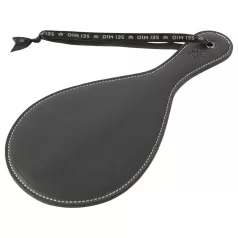
- Light paddles: allow you to experiment with impact gradually.
- Sensory accessories: useful for teasing and playing with anticipation.
If you are curious about impact play, browse BDSM whips and paddles to see how different designs vary before choosing anything.
The goal at this stage is not finding the most advanced toy. It is discovering which type of play you both enjoy. A detailed BDSM toy guide can come later, once words like cuffs, paddles and restraints no longer feel like an entirely new language.
Discretion matters too: When you decide to explore with accessories, discreet packaging, secure payment and reliable delivery can make the shopping part feel refreshingly uncomplicated.
Do you need to be dominant or submissive to enjoy BDSM?
No. You can enjoy BDSM without deciding that you are dominant, submissive or anything in between. These terms describe roles and preferences that some people find useful, not permanent identities you need to choose before experimenting.
A dominant person, often shortened to Dom or Domme, consensually takes more control within an agreed dynamic. A submissive, often shortened to sub, consensually gives up some control.
Someone who enjoys both sides may describe themselves as a switch.
But plenty of couples are less tidy than the terminology suggests.
You might love being in control during one fantasy and want your partner to lead the next time. Perhaps one of you enjoys restraint but dislikes being given orders. Maybe handing over control is exciting, while traditional BDSM roleplay leaves you completely cold.
All of those combinations work.
For beginners, asking "What would turn us on?" is usually more useful than asking "Which BDSM role am I supposed to be?"
Explore first. Label later, if you even want one.
What is BDSM aftercare and why does it matter?
BDSM aftercare is the physical and emotional check-in that happens after a scene or particularly intense experience. It gives both partners time to return to everyday mode, reconnect and deal with any physical or emotional needs that have come up.
Aftercare does not have one correct form.
- cuddling and talking,
- drinking some water,
- having a shower,
- grabbing a snack,
- lying quietly together,
- or giving each other a little space.
The person who took the dominant role may need aftercare too. Being responsible for another person's experience can be emotionally intense, even when everything went beautifully.
This is also a good moment to check for marks, irritation or discomfort and decide whether anything should change next time.
Do not feel obliged to conduct a full performance review immediately. Comfort first, detailed feedback later.
Good to know: If you add accessories to your play, body-friendly materials, good construction and easy cleaning are worth prioritising. Discreet packaging and a straightforward shopping experience can also make trying something new feel much easier.
Where can you go after the BDSM basics?
Once the BDSM basics feel comfortable, the next step is usually exploring one interest more deeply rather than simply making everything more extreme. More experienced BDSM can mean better communication, more anticipation or a more developed power dynamic just as easily as it can mean stronger sensations.
If restraint is what caught your attention, our guide to Shibari and Japanese bondage takes a closer look at rope bondage, its appeal and the extra safety considerations involved.
If control and prolonged teasing sound more interesting, Orgasm Denial: How to Build Desire Safely explores another kind of consensual power play.
And BDSM is not the only way to shake up your routine. If physical experimentation is more your thing, 7 Extreme Sex Positions for Advanced Couples offers a completely different route.
Follow the part that genuinely sparks curiosity. There is no BDSM progression chart and nobody is handing out trophies for reaching the complicated stuff fastest.
BDSM for beginners FAQ
Is BDSM safe for beginners?
Yes, when everyone communicates clearly, understands the activity and agrees on boundaries. Start slowly and stop whenever something feels physically or emotionally wrong.
What is a good BDSM safeword?
Choose something short, clear and easy to remember. "Red" for stop and "yellow" for slow down are simple options that work well.
Can you try BDSM without buying any toys?
Absolutely. Power exchange, instructions, anticipation and roleplay can all be explored without accessories, so you can first discover what actually turns you on.
What are good BDSM toys for beginners?
Blindfolds, soft cuffs, simple restraints and lighter paddles are popular starting points because they are easy to understand and control. Begin with one new element at a time.
What is the difference between a Dom and a sub?
A Dom or Domme consensually takes more control, while a sub consensually gives up some control. Some people enjoy both roles and identify as switches.
Can long-term couples start exploring BDSM?
Of course. BDSM can give long-term partners a new way to talk about fantasies, boundaries and control, even if they have never explored it before.
BDSM for beginners does not have to start with anything extreme. It starts with a conversation about what sounds exciting, what stays off the table and how you will make sure both of you continue to enjoy what is happening.
When you feel ready to explore beyond the conversation, browse BDSM accessories at Desirel.ie and take it at your own pace. The best first step is not the most impressive one. It is the one you both genuinely want to take.
Shibari is much more than a simple dominant-submissive game. The Japanese art of bondage is a true form of expression for many. If you’re even slightly curious about the world of BDSM, you’ll love reading this guide.
What happens when orgasm stops being the finish line and becomes part of the game? Orgasm denial turns anticipation, trust and a perfectly timed “not yet” into the main attraction.
Extreme sex positions require more balance, flexibility or coordination than familiar bedroom favourites. This guide explains seven advanced positions, rates their difficulty and shows how couples can adapt each one with better support, slower movement and clear communication.
Curious, excited and slightly nervous about threesome sex? This practical guide helps couples talk honestly, set clear boundaries and explore the fantasy without treating anyone like an extra in someone else's scene.