

The Biggest Turn-Offs — And How to Get Your Libido Back
You’re not broken — your lifestyle could simply be quietly lowering your sex drive. In her 5-part series, licensed sexologist Sofie Roos reveals the everyday habits that can damage libido, and shares practical ways to help you feel desire again. Keep reading — the real cause may be closer than you realise.

Are you asking yourself why you hardly ever feel in the mood these days?
Your sex drive is highly sensitive — it responds to the way you live, the way you feel, and the way you look after yourself — every single day.
The difficult part is that many of the habits that damage libido have become so normal in everyday life that you stop spotting them altogether.
My name is Sofie Roos, and I’m a licensed relationship therapist and sexologist as well as author at the Swedish sex and relationship magazine Passionerad, and in this article, I’ll show you which everyday patterns can weaken desire, while also guiding you through natural ways to boost libido and reconnect with your interest in sex.
What Kills Sex Drive — Why Am I Never in the Mood?
Here are 7 common habits that quietly lower sexual desire — and what you can do to turn things around.
1. Long-Term Stress is One of the Biggest Enemies of Desire
Does stress reduce libido? Absolutely — when your body is stuck in survival mode, intimacy is often the first thing to fade.
A study published in The Journal of Sexual Medicine from 2024 found that men with higher stress levels reported poor or very poor libido more often than men with mild or low stress. The same study also showed that stressed men had sex less frequently.
When stress takes over, your body starts treating intimacy as non-essential, because its main focus shifts towards handling whatever feels overwhelming or threatening.
A 2009 study reported that women with increased cortisol responses during sexual stimulation also experienced lower sexual function, including lower sexual desire.
Cortisol is often called the stress hormone, and high levels can suppress sex hormones, disturb sleep and worsen your overall mood — all of which make it harder to feel open to intimacy during stressful periods.
That is exactly why lowering cortisol and reducing stress can have such a powerful effect on your libido.
What you can do instead:
If stress is damaging your sex life, managing it needs to become a real priority.
Try lowering the pace of your day on purpose, even if only for a short while. Spending just 10 minutes being fully present can make a difference. Breathing exercises can help as well, so it’s worth pairing them together.
Talking to your partner about what feels heavy or stressful is another method I strongly recommend, because feeling seen and understood can reduce the emotional pressure.
Regular movement is also one of the best ways to release stress. More on that in a moment.
2. Sleep and Desire — a Commonly Overlooked Cause of Low Libido
You’ve probably already noticed it yourself, but tiredness can easily feel like lost sexual desire. Poor sleep and too little rest can reduce testosterone in both men and women, affect mood, drain energy and create the exact opposite conditions of great sex.
Do this instead:
A study from 2015 found that each additional hour of sleep increased the likelihood of sex by as much as 14% the next day, and longer sleep was also linked to higher desire.
Additionally, another study from 2019 involving older adults found that poor sleep was associated with worse overall sexual function.
So yes, aiming for 8 to 9 hours of quality sleep each night really matters. Build an evening routine that helps you unwind, such as putting screens away an hour before bed, reading for a while, having a calming tea or simply chatting with your partner.
It also helps to go to bed at roughly the same time every night, avoid lying in bed when you’re only relaxing, and start seeing good sleep as an investment in your sex life rather than a luxury you can skip.
3. Too Little Exercise Can Lower Libido
Blood flow and sexual function are closely connected, which is one reason a lack of exercise can affect not only sexual performance, but also your libido.
Research from 2014 found that regular physical activity can improve sexual function and, in some cases, desire as well, partly because it supports better mental health, improved mood and a more positive body image.
Another study from 2003 found that increased physical activity and better fitness were linked to feeling more attractive and experiencing better sexual performance.
In other words, today’s inactive lifestyle can slowly weaken your connection to sex. Physical activity increases circulation, including blood flow to the genitals, helps you cope with stress and boosts testosterone levels, especially in people over 40.
Do this instead:
Because movement can act as a genuine arousal booster and can also improve body confidence, I always recommend finding a type of exercise you actually enjoy and can keep doing consistently.
That might mean daily walks, gym sessions, dancing, tennis, swimming or yoga — it all counts.
So this isn’t about chasing a “perfect body”. It’s about getting your body moving again.
4. Low Self-Esteem Can Make Sex Feel Less Appealing
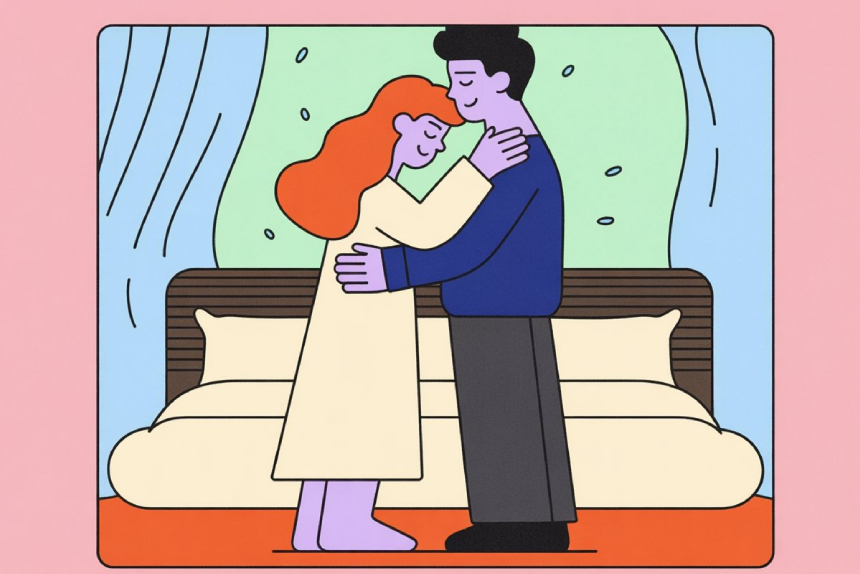
Did you know that body shame can shut arousal down completely?
When you don’t feel secure in your own body, it becomes much harder to relax and stay present during intimacy, because your mind fills up with thoughts like “How do I look?” or “Am I enough?”.
That kind of self-criticism is a serious mood killer. When your focus shifts from what you feel to how you appear, it becomes nearly impossible to enjoy intimacy fully.
How to fix it:
If this sounds familiar, start practising being in your body rather than trapped in your head. Dimming the lights can make things easier, but the most helpful step is often talking openly with your partner about what feels vulnerable or difficult.
It also helps to remind yourself that attraction is not built on being “perfect”, but on who you are as a person.
And if social media leaves you feeling worse about yourself, take that seriously. Step back from content that makes you feel inadequate and seek out more body-positive creators instead. That shift alone can change the way you see your own body.
Desire grows far more easily when self-acceptance is part of the picture.
5. Relationship Tension and Ongoing Conflict Can Drain Desire
Unresolved conflict often reduces attraction, because it is difficult to feel sexually close to someone when you are carrying irritation, disappointment, bitterness or resentment.
Even small issues that never get addressed can create emotional distance over time, and when emotional closeness fades, physical intimacy usually suffers too.
Do this instead:
My strongest advice is to communicate clearly and honestly, and to talk about problems when they happen rather than letting them build up.
Creating regular moments for emotional check-ins, while also investing in non-sexual intimacy such as cuddling, eye contact and affectionate touch, can make it much easier to bring up the things that are bothering you before they damage the connection between you.
6. Porn, Alcohol, Tobacco and Reduced Desire for Your Partner
A study from 2007 found that alcohol addiction was strongly linked to decreased libido in men, and was one of the most common reasons behind low sexual desire. As many as 72% of men with a problematic relationship with alcohol reported one or more sexual problems, with low desire being common.
This happens because frequent alcohol use can disrupt hormonal balance, interfere with sleep and weaken sexual function.
Another study from 2017 found that men who smoked heavily had more than double the risk of lacking interest in sex, and women who smoked also reported reduced sexual function.
And even if smoking and drinking are not part of your routine, porn can still affect desire. It trains the brain to expect fast, intense dopamine hits, which can make real-life intimacy feel less stimulating by comparison.
It can also make arousal feel more connected to a screen and solo stimulation than to closeness, touch and connection with a partner.
What you should do:
Try cutting back on alcohol, especially during the week, so your body has a better chance to reset. Reduce porn as well, and when you do feel turned on, try directing that energy towards intimacy with your partner instead.
Cutting down on smoking — or ideally stopping altogether — can also make a real difference.
If you make these changes, your brain can gradually relearn to respond to real-life intimacy again. It may take time, but it is absolutely possible.
7. Waiting for “the Right Feeling” Can Leave You With No Sex Life
Many people assume that sexual desire should always appear out of nowhere, but there are actually two types of desire. They are called spontaneous desire and responsive desire, and in long-term relationships, desire is very often responsive rather than spontaneous.
That means the interest in sex often arrives after intimacy has already started. So if both of you mainly experience responsive desire, but keep waiting to feel instantly in the mood before doing anything, your sex life can slowly disappear — and that often leads to even lower libido over time.
What you can do instead:
Start seeing intimacy as something you can gently initiate, even before you feel fully in the mood, and then pay attention to how your body responds.
It also helps to be intimate without putting pressure on yourselves to have sex every time. When there is less pressure, desire often has more space to build naturally.
Bottom Line — Your Libido Reflects the Way You Live
Your libido does not exist separately from the rest of your life — it is shaped by stress, sleep, exercise, your relationship dynamics and the way you view yourself.
The good news is that even small lifestyle changes can make a surprisingly big impact. So focus on creating a healthier everyday life for yourself, your relationship and the people around you, and you may find that desire starts returning naturally — without needing supplements at all.
You used to want each other all the time, but now the spark feels far away. In her 5-part series, licensed sexologist Sofie Roos explains why desire naturally shifts in long-term relationships, and what that really means for your love life. Keep reading — it’s more common than you might think.
You used to feel turned on out of nowhere, but now it seems like one of you always has to make the first move. In this 5-part series, licensed sexologist Sofie Roos explains the two types of sexual desire and why most couples naturally shift from spontaneous to responsive desire over time. Read on — understanding this could change everything.
Getting the spark back is one thing — keeping it alive over time is another. In the final part of her 5-part series, licensed sexologist Sofie Roos shows you how to maintain desire in the long run and avoid slipping back into old habits. Keep reading — this is where lasting change begins.
Losing the spark does not mean it is gone for good — it simply means it is time to build it back up. In this five-part series, licensed sexologist Sofie Roos shares her most effective tips for reconnecting sexually with your partner and reigniting desire. Keep reading — a better sex life starts with knowing where to begin.


