

We’ve Lost the Spark — Why Desire Changes in Long-Term Relationships
You used to want each other all the time, but now the spark feels far away. In her 5-part series, licensed sexologist Sofie Roos explains why desire naturally shifts in long-term relationships, and what that really means for your love life. Keep reading — it’s more common than you might think.

The early stage of a relationship can feel like absolute fireworks. You can hardly keep your hands to yourselves, you want each other close in every possible way, and your sex life feels effortless, exciting and full of heat.
Then, over time, something shifts. Daily responsibilities take over, the relationship starts revolving around routines and practicalities, and the sex and intimacy that once came so naturally can begin to feel far away.
That is usually when the questions start creeping in: “Why don’t I want my partner the way I used to, even though I still love them?” and “Is it actually normal for sexual interest to change as the years go by?”
My name is Sofie Roos, and I’m a licensed sexologist and relationship therapist, as well as author at the Swedish sex positive magazine Passionerad, and throughout this series I’ll guide those of you in long-term relationships who want to reconnect with desire and intimacy again.
Before we get into how to bring that spark back, let’s start with something important: a change in desire is completely normal, and it is very possible to deeply love each other while still feeling that the spark has gone quiet.
From the Heated Honeymoon Phase to Steady Secure Attachment — the Two Stages of a Relationship
If you still care deeply for each other but the passion feels missing, one possible reason is that your relationship has moved from new love into secure attachment.
At the beginning of a romantic relationship, most of us enter the infatuation stage, often called the honeymoon phase, which according to a 2015 study is very real, even if it is not always quite as dramatic as films and social media would have us believe.
During this period, your body is flooded with feel-good chemicals such as dopamine, serotonin, norepinephrine and phenylethylamine. That chemical mix can create obsession, excitement, euphoria and powerful sexual desire, which is why everything can feel so intense and all-consuming.
What Happens When the Attraction Starts to Shift — Is Passion Only About Chemicals?
Of course, passion is more complex than saying it is nothing but brain chemistry, but at the same time, neurotransmitters and hormones do play a major role in how attracted, connected and turned on you feel with a partner.
As magical as the honeymoon phase can be, it is not meant to stay exactly the same forever. After a while, those intense feelings tend to make room for a deeper, calmer and more dependable bond known as secure attachment.
Instead of constant butterflies and nervous excitement, you begin to feel settled and safe around each other. Instead of always trying to impress one another, you can relax more fully and simply be yourselves together. In this stage, oxytocin, often called “the love hormone”, becomes increasingly important.
So even though it is incredibly common to feel as though the attraction has faded when you enter this more secure phase, that does not necessarily mean desire has disappeared. More often, it has simply changed shape.
Why Does Lust Change Over Time, and Why Don’t I Feel Desire for My Partner Anymore?
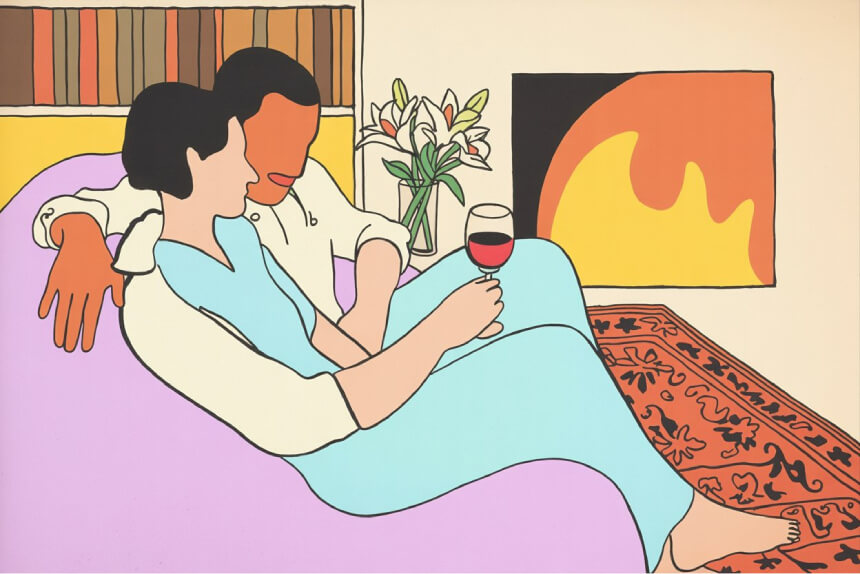
Lust is not fixed, and there are several reasons why it can shift during a long-term relationship. Here are four of the most common ones.
1. The Sense of Newness Wears Off
At the start, everything feels fresh. You are discovering each other’s bodies, sexual likes, boundaries and fantasies for the very first time, and that sense of novelty can be a huge turn-on.
When sex becomes more familiar over time and starts to fall into recognisable patterns, the buzz that comes from the unknown often fades too.
2. Feeling Safe Changes the Energy — Lust Slowly Becomes Love
It might sound odd, but safety and passion do not always feed each other in equal measure.
Passion often thrives on anticipation, distance, unpredictability and longing. When you feel fully secure in the knowledge that your partner is there and not going anywhere, that urgent “I want you now” feeling can naturally become less intense.
3. Life Takes Over — Stress Has a Massive Impact on Desire
This 2025 study found strong links between stress and reduced interest in sex, especially in women, showing just how sensitive our libido can be when life becomes overwhelming. In stressful periods, the body tends to prioritise survival, recovery and rest over sexual excitement.
That means intense phases involving young children, work pressure, financial strain, sleep deprivation or poor routines can all have a negative effect on libido.
So if work is draining you, or your kids are taking more out of you than usual, it is completely realistic to notice that you have less appetite for intimacy with your partner.
Do also read: These are the biggest mood killers to avoid
4. We Get Too Comfortable — Complacency Can Hurt Your Sex Life
At the beginning of a relationship, most people put in more effort. You dress up, pay attention to the little details, plan dates and actively flirt. All of that helps create a more sensual, playful and turned-on atmosphere.
As time passes, many couples stop making that extra effort because the relationship slips into autopilot. It becomes easy to get comfortable, assume the connection will take care of itself, and take what you have for granted. Sadly, that often leads to less sex and less intentional intimacy.
Is it Normal to Stop Having Sex in a Relationship, or Does Lost Desire Mean It’s Over?
One of the most common fears couples have when desire drops is: “We’ve lost it for good” or “Maybe we are not right for each other anymore — maybe this is how the end begins.”
But I want to reassure you that having less sex in a long-term relationship is not a sign that everything is falling apart. More often, it is a sign that your relationship has matured, while intimacy has been left a bit behind, and now needs more attention and care again.
Because here is something important: the honeymoon phase is biologically designed to help us bond, but it is not meant to last forever.
If that stage went on endlessly, we would probably struggle to focus on work, parenting, routines or anything else in daily life. So it is completely natural that the sex you have years into a relationship does not look exactly like the sex you had at the start.
A lot of people assume desire should always appear out of nowhere, but that is not how it works for everyone. Read about spontaneous vs. responsive lust here.
Accept that Your Sex Life is Evolving
It can be surprisingly harmful to keep measuring your current sex life against what you had in the beginning.
Instead, ask yourself what you genuinely miss, what you are craving now, and what kind of intimacy would feel good in this stage of your relationship. Stop treating it like you need to recreate the past, and start seeing it as a chance to build something new that fits the two of you as you are today.
This Is a Starting Point, Not a Finish Line
In the end, try to see it as a good sign that you have even noticed this change in desire. Awareness is often the first step towards rebuilding intimacy and shaping your sex life into something that feels exciting and right again.
A changing sex life is completely natural, and even if it feels like you have gone from a blazing fire to glowing embers, remember this: embers can burn for a very long time when given oxygen, and they can hold just as much heat as flames.
You used to feel turned on out of nowhere, but now it seems like one of you always has to make the first move. In this 5-part series, licensed sexologist Sofie Roos explains the two types of sexual desire and why most couples naturally shift from spontaneous to responsive desire over time. Read on — understanding this could change everything.
You’re not broken — your lifestyle could simply be quietly lowering your sex drive. In her 5-part series, licensed sexologist Sofie Roos reveals the everyday habits that can damage libido, and shares practical ways to help you feel desire again. Keep reading — the real cause may be closer than you realise.
Getting the spark back is one thing — keeping it alive over time is another. In the final part of her 5-part series, licensed sexologist Sofie Roos shows you how to maintain desire in the long run and avoid slipping back into old habits. Keep reading — this is where lasting change begins.

Losing the spark does not mean it is gone for good — it simply means it is time to build it back up. In this five-part series, licensed sexologist Sofie Roos shares her most effective tips for reconnecting sexually with your partner and reigniting desire. Keep reading — a better sex life starts with knowing where to begin.


